Tuesday, 5 June 2012
The story of HANG TUAH
Origins of Hang Tuah ( and Hang Jebat Hang Lekiu etc)
By John Chow
This is what I heard:-
Findings of the team of scientists, archaeologist, historian and other technical staff from the United State, United Kingdom, Germany, Canada, Yemen & Russia
The graves of Hang Tuah, Hang Jebat, Hang Lekiu and their close friends have been found and their skeletons had been analysed. Their DNA had been analysed and it is found that Hang Tuah, Hang Jebat, Hang Lekiu etc. are not Malay, but Chinese (Islamic Chinese, just like the famous Admiral Cheng Ho). Malacca was a protectorate of China at that time, and the Emperor of China sent the Sultan of Malacca “yellow gifts’ as a token of his sovereignty. The 5 warrior brothers were believed to be sent to help protect Malacca and its Sultan from Siam (Thailand).
The Sultans of Malacca was directly descended from the Parameswara from Indonesia who fled to Tamasek (Singapore) and then to Malacca. The Malaccan Sulatanate family eventually spread and became the Sultanate of the other Malay states of Perak and Johor. Therefore, the Sultanate royal court and the aristocrats of the Malay sultanates are actually foreigners from Sumatra and Java. Hang Tuah and his friends were the protectors of the Indonesian aristocratic Parameswara family who came to Malaya around 1400 AD and claimed sovereignty of the land.
For confirmation please refer to:-
The Federal Association of Arc & Research of Michigan, USA
John Chow’s notes:-
“Hang” is an unusual surname or name for a Malay. It sounds like s corruption of a Chinese surname.
In fact, Chinese names start with the surname first, and given names last. Malay names start with the given names first, and the father’s name last (as in Ahmad bin Yusuf which means “Ahmad, the son of Yusuf”). There is no surname in traditional Malay! There is no surname to carry forward to the next generation.
We also need to examine the genealogy. We know that Hang Tuah’s father was Hang Mamat. Here, we do not see a Malay name transmission. We see a name being carried forward. It is also noted that the placement of the name that is carried forward is in front. This indicates that the surname is “Hang”. It is the transmission of Chinese names.
We also know that Hang Tuah’s son is Hang Nadim. Again, the name “Hang” is carried forward, and yet again, auspiciously in front, as a Chinese name would be, with the surname in front. There is no indication of a Malay naming convention.
Note that Hang Nadim is also known as Si Awang (Malays would colloquially refer to others as “Si”. “A” or “Ah” is a common prefix for referring to others in Chinese. Thus, a person with surname Wang/Huang would be referred to as “Si Ah Wang” in Malaysia - Mr. Ah Huang) by the Malays.
Note that Hang Tuah’s mother is Dang Merdu. “Dang” would be quite an unusual surname for a Malay also. However, “Dang” or “Tang” is a common Chinese surname. Note that the name “Dang” is in front, signifying that this is a Chinese naming convention, yet again.
Some Malays will argue that “Hang” is an honorific term (Humba) for those that serve the royal courts. http://www.freewebs.com/suaraanum/0506b02.htm This argument is not tenable. Firstly, where is the precedence in sultanates that preceded the Malaccan Sultanate? Secondly, where is the evidence that this is so in succeeding sultanates? Thirdly, where is the evidence that this practice was carried out in the sultanate of that time? And has that Sultan given it to other court official and the royal family and their court officials and courtesans? Where is the evidence? Fourthly, since Hang Tuah’s father is called Hang Mamat, then he would have served the Sultan prior to Hang Tuah. But there is no evidence this is so. In fact, there is evidence that Hang Tuah was a very poor kid in the village. His father was not a high court official, and he was not brought up in the court. In addition, since if Hang Tuah’s father Hang Mamat had already served as a high court official, why must Hang Tuah be educated in Bahasa Melayu and court etiquette etc. again since the family is already indoctrinated in royal protocol?
"Dalam perbendaharaan nama-nama orang Melayu semasa zaman kesultanan Melaayu Melaka, tiada terdapat nama-nama seumpama Hang Tuah, Hang Kasturi, Hang Jebat, Hang Lekir, Hang Lekiu, ringkasnya ringkasan yang bermula dengan ¡®Hang¡¯. Sejarah juga telah mencatatkan nama-nama dari bangsa Cina yang bermula dengan Hang, Tan, Maa dan Lee. Ia bergantung kepada suku kaum atau asal-usul keturunan mereka dari wilayah tertentu dari China. Kemungkinan untuk mendakwa bahawa gelaran ¡®Hang¡¯ telah dianugerahkan oleh Raja-Raja Melayu juga tiada asasnya. "
The last sentence loosely translates as, "There's the possibility to propose that the term "Hang" conferred as a honorific by the Malay Kings also has no basis."
Moreover, before the time of the 5 warriors with their close families during this close period of relationship with the Chinese, there are no Malays with this name.
Note that the Chinese ‘princess’ who married the Sultan of Malacca was called “Hang Li Po”. Here, we not only see the same name, but the name is also in front, indicating a Chinese naming convention. Hang Li Po brought along with her many servants and bodyguards from China who became the Baba and Nyonya's of Malacca - these folk exist to this day. Chinese who do not know how to speak or write Chinese. They have been totally ‘malayanised”. Babas are people of Chinese descend who have been malayanised to such an extent that they wear Malay clothing, eat Malay food (with some Chinese food), speak Malay, and do not speak or write Chinese. Malacca is famous for its Baba communities. The only thing that is Chinese about them is that they are of Chinese ancestry. If you say that Hang Tuah is a Malay in the same sense that these Chinese have been malayanised, then you might be quite right. However, at this present moment, we are arguing on the basis whether he was an ethnic Malay or an ethnic Chinese, in the sense of blood ancestry. .
There is an old Chinese tradition where warriors or servants in the royal palace were given or re-issued with surnames given by the emperor, to signify that they belong to the emperor, or to one of his offsprings. Therefore, it is possible that some very special bodyguards of the emperor or the royal family, have the same surname to signify that they are a unit formed especially to protect that one owner. Since the Princess Hang Li Po was given away in marriage to a strategic partner whose land the emperor wanted to ensure is safe and stable, he assigned a group of able warriors to the Princess Li Po, and he gave their families the same surname. This is not an unusual practice for the Chinese emperor.
As for Hang Kasturi having 4 characters in his name, it is unusual, but it does happen that some Chinese have only 2 characters, and some have 4 characters in their names. For example, my paternal grandmother had only 2 characters in her name.
See: http://www.anu.edu.au/asianstudies/ahcen/proudfoot/mmp/rtm/teachers.html
In the GENEALOGICAL TREE OF THE ROYAL FAMILIES OF PERAK STATE (http://www.geocities.com/aizaris/genealogy), you may note 2 things:-
1) Evidence that traditional Malay naming conventions do not carry the name of the father forward.
2) There is no surname to carry forward
3) Neither name nor surname are placed in front.
4) The genealogy of the early part of the lineage tree makes reference to Chinese ancestry:- “Putera Chedra China” “Puetra China” and then later “Paduka Sri Cina”
This proves there has been early Chinese links in the Malay/Indonesian races and aristocratic lineages.
One Malay argued that Hang Tuah was already in the service of the Sultan before Hang Li Po was sent to Malacca. However, there is not evidence of this. A probable reference is the semi folklore Hikayat Hang Tuah, whicjh is not very reliable as it has many contradiction to Sejarah Melayu. . From the Ming Dynasty chronicles does not mention Hang Li Po or Hang Tuah but did mention the trip of Sultan Mansur Shah. See: http://thepenangfileb.bravepages.com/histr36.htm
It is even possible that Hang Li Po was a minor “princess” (ie. only a daughter of a court official) who the emperor ordered to be given away to marry a vassal sate in order to ensue loyalty and close diplomatic relation. The whole event was blown up to given the foreign king a big ego boost that the great Chinese overlord gave him his own daughter in marriage! (It is doubtful that the conservative Chinese emperors would give their daughters away to somebody living in a foreign land very far away). It has happened before in the history of China. For example, the Tibetans think that their King Sonten Gampo forced the Chinese emperor to give away his daughter in marriage in order to make peace with great big powerful Tibet. The story from the Chinese side is that the Chinese emperor tricked the egotistical Tibetan king into believing that the palace maid was a princess and sent her off with her retinue and gifts. It was a ‘diplomatic trick”. Therefore, it is possible that the Chinese court repeated the trick on Sultan Mansur Shah, and gave him a “Chinese princess” with many gifts for the Sultan. In the meantime, he sent some warriors to the Sultanate to help ensure peace, safety and stability in the region – all in China’s national interests. Protect your friends and your interests will be protected. Or it could have been a ploy used by the Chinese emperor and the Malaccan sultan to use this marriage of a “princess” to deter the Siamese kings from encroaching on Malaccan territory. Siam would not dare to invade Malacca whose sultan is a son in law of the mighty Chinese empire!
Footnote:-
The 5 sworn brothers who studied and practised Silat together are:-
Hang Tuah, Hang Jebat, Hang Lekir, Hang Lekiu and Hang Kasturi.
Further references:-
Serajah Melayu – History of the Malay Peninsula
http://www.sabrizain.demon.co.uk/malaya/parames.htm
Parameswara and the founding of the Sultanate of Malacca by John Chow
This is my limited understanding of this subject matter.


Wednesday, 23 May 2012
Tuesday, 22 May 2012
Wednesday, 16 May 2012
THE GIRAFFE @ JALAN MERU, KLANG

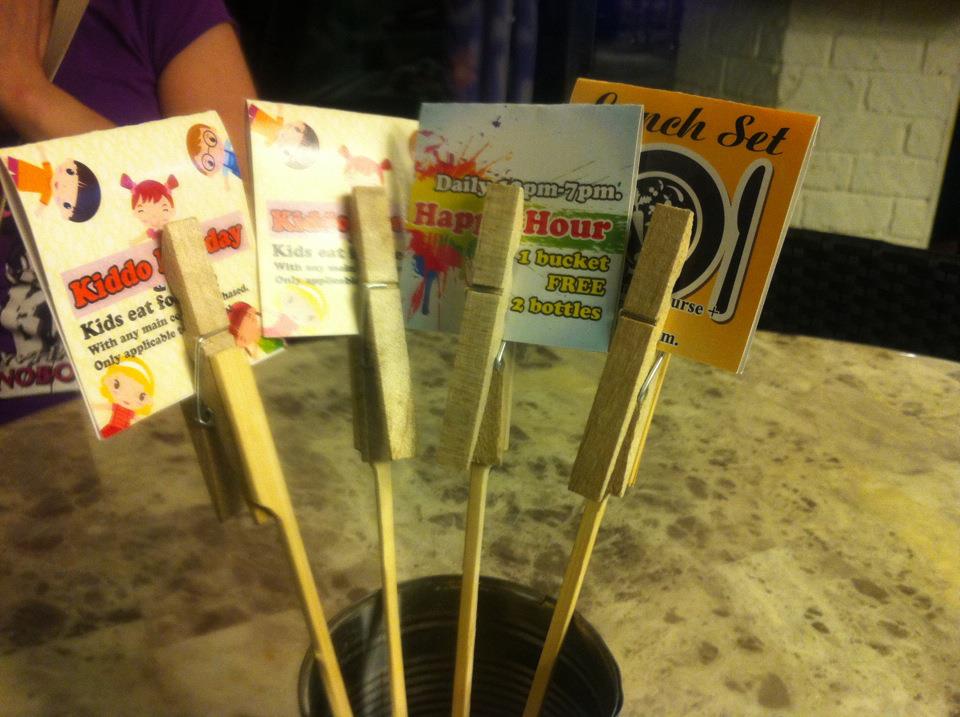


Overall, i would rate a 6.5/10 for this restaurant.
ADDRESS :-
THE GIRAFFE
BLOCK L4-1-2,
JALAN PEKAN BARU 34,
41050 KLANG , SELANGOR D.E.
Tuesday, 15 May 2012
Bersih through an 18 years old eye!
An A-levels student details his experiences and the lessons learnt during the April 28 Bersih 3.0 rally.
By B Anand
Free Malaysia Today
May 15, 2012
COMMENT
Admittedly, this article might be a bit overdue, however it was mainly due to the fact that I’ve been bogged down with my upcoming A-levels. As I sat in front of my laptop the night before, watching the crowds assemble near Dataran, I was still mulling over whether or not I should attend.
A part of me posed the following questions: What if I get hurt, gassed or sprayed? What if I get arrested by the police? Was it wise to take such a risk right before such an important exam?
However, I also thought to myself: As a future law student, shouldn’t it be my duty to defend our right to protest? And more importantly, if ever I was forced to join the Malaysian diaspora, would I ever be able to forgive myself for not having tried fighting for my rights first?
In the end,regardless of the risks it posed, I felt that it was my duty to attend. Being 18, I am not yet eligible to vote; however I had always believed in the Bersih cause, as a clean and fair electoral system is the only way in which we could obtain a government that truly represented the interests of the people.
In addition to the above, I was also dumbfounded by the illogical reactions of certain quarters to the rally. And so, with vinegar soaked masks, swimming googles, earplugs, legal aid numbers saved on my phone, a towel, water and some food in my bag – I left the comfort of my home, ready for whatever might come. A part of me was excited to become a part of national history, however I would also be lying to say that I wasn’t nervous and expecting the worst.
I travelled to Brickfields with family members who attended the rally together with me. Police presence was relatively heavy, and I remained anxious as I walked past the officers. What if they decided to arrest me there and then? I decided to smile at them; to my surprise, they smiled back! I felt somewhat reassured, and the huge participant turnout reaffirmed it.
Upon joining the crowd, we coincidentally bumped into a group of church friends and began our march with them. To the chants of “Hidup Bersih!” and “Hidup Rakyat!”, we were cheered on by the many observers on the sidewalk and by a majority of the cars, motorbikes, a convoy of postmen and even a KTM commuter train who blared their horns in support of us.
While walking towards the city, I met people from all walks of life, of all ages, many races and many backgrounds; coming together for the good of the nation. Of all those people, the most memorable ones included a Standard Two boy, a brave disabled man on crutches, and an incredibly beautiful protester who was walking together with us (lets face it, boys will be boys).
Ever since the concept of 1Malaysia had been introduced, I had not an idea of what it meant until Bersih 3.0. By this point, every feeling of nervousness which I had felt before had practically disappeared. Never in my life, had I been so proud to call myself a Malaysian.
Businesses make a killing
Upon joining with the group from Central Market, we stopped for a break. To my surprise, I coincidentally bumped into a friend from school as well as a priest from a nearby church. Despite many businesses being closed, my group and I proceeded to an open Mamak shop to have lunch. To say that business was great would be an understatement.
There were many vendors making a killing from selling cold drinks as well. It was amazing to see how much fuss some businessmen had made in response to Bersih and the supposed millions-upon-millions claimed in losses. Had those businesses decide to open on that day – just like those that did – they would have made a killing too. Why bother getting into business when you don’t even know the basics?
After lunch, we proceeded to a stage at Central Market where we had the honour of seeing S Ambiga herself. I was unable to hear what she was saying due to the deafening cheers, however just being in the presence of such a great Malaysian was sufficient for me.
As a giant group, we then marched towards the direction of Dataran Merdeka with the chants of “Bersih!”, “Hidup Rakyat” and “Hancur Lynas”.
Admittedly, there were also chants of “Reformasi”, however these chants had little traction with the people. At 2pm, we were reminded to sing the Negaraku; and the entire crowd did so with spontaneity. The sound of our voices together were deafening albeit a bit out of pitch – though there was no doubt that a sense of nationalistic fervour had gripped the crowd.
As we approached Jalan Tun Perak, we could hear the chants and cheers of the mammoth-sized crowd that had already assembled there. We merged with the giant sea of people, and my group and I successfully got a place right outside the Burger King outlet (which was also filled to the brim, by the way). We had ourselves a great view, and the atmosphere was akin to a giant festival. We then proceeded towards the side of the Masjid Jamek station – where we had a seat.
We had no idea of what was happening at the other end, and were just minding our own business until we noticed a sudden rush of people. It did not take us long to realise that something was up, and that tear gas had been shot. We had no idea that the barricades at Dataran Merdeka were breached.
In the sudden rush, we had lost a cousin while heading to Medan Pasar – somewhat away from all the pandemonium that had spontaneously ensued. We stopped near the clock-tower to try and get in touch with my cousin. While doing so, however, we heard a loud gush of water like the sound of a distant waterfall. To our shock, large jets of water were being fired on the adjacent road (Leboh Pasar Besar). The entire crowd made a run for it. We had no idea where we were heading.
It wasn’t long until we began to feel the effects of the tear gas which had wafted from nearby. It felt like rubbing your body and face with chillies. We began to help each other in the crowd – some distributed salt and water, others helped the elderly – all of us random strangers.
We took random backroads and alleyways, eventually finding ourselves in the midst of the Pudu bus station where we took refuge. Still recovering from whatever had happened, I was made even more dumbfounded by the fact that they had closed the LRT station. Why bother ordering us to disperse, only to have the LRTs closed?
An hour later, when things had somewhat settled, we began to make our way home. Before leaving the Pudu bus station, I made it a point to give a yellow flower I had received from a protester to the police in the police booth at the bus station. They were surprised, to say the least.
From Pudu, we walked to Berjaya Times Square where we boarded a cramped Monorail filled with fellow protesters. Upon reaching KL Sentral, we were picked up by the cousin whom we had lost in the rally, who somehow managed to get himself home before us. In the car, I remained silent with a smile on my face – still trying to contemplate the day’s events.
Tunku and gang smiling
In a nutshell, I had walked miles-upon-miles in the blazing heat with thousands of people, I was tear gassed and ran instinctively; not knowing where I was going – and yet I was happy as ever. It just goes to show that the best thing to do in life is to follow your conscience, no matter how risky it might be – one of the many lessons being part of Bersih 3.0 had taught me.
I awoke the next day to the papers highlighting the supposed chaotic nature of the rally initiated by protesters. To say that I was angry would be an understatement. Looking at some videos that surfaced online, there was undoubtedly sporadic violence by protesters which had occurred; as a Bersih believer, I condemn such violence. But what about the numerous accounts of police brutality? Why did the media fail to acknowledge that? Selective amnesia perhaps?
It was incredibly appalling that some quarters refused to even acknowledge the aspects of unity and creativity seen, and the predominantly peaceful nature of the assembly. Do they not seem to realise that by doing so, they actually stand to give their arguments more credence?
Looking back at the rally, I see the denial of Dataran Merdeka as the protest venue a blessing in disguise.
Why? Because it symbolises the dreams and aspirations of our founding fathers which have yet to be fulfilled. They dreamt of building a society that would wholeheartedly reflect the will of the people, and not of a select few. Such a society could only be built by electing a government through a free and fair electoral process.
The spirit of those who fought for our independence years ago was very much present in Bersih 3.0; and as we continue in our fight for this cause, it’s safe to say that Tunku and gang are smiling from above – proud of everything we have done. Hidup Bersih, Malaysia Boleh!
Subscribe to:
Posts (Atom)